
Why Einsatzlog exists
A large-scale drill, an Einsatzleiter juggling radio traffic on paper, and the question that started this: could we build something that fits every volunteer firefighter?
From firefighters, for firefighters
The digital Einsatztagebuch for fire and rescue services. Log radio traffic in seconds — with gloves on, at night, under pressure. Offline. Free. Forever.
Arrived on scene, reconnaissance under way.
Room fire on the 2nd floor, persons at risk, smoke spreading into the stairwell.
Advance C hose line via the stairwell, rescue on the 2nd floor.
Requesting a turntable ladder and a second ambulance.
Breathing apparatus monitoring started, crew 1 under BA.
This is what the entry stream looks like in the app
At almost every fire station in Germany, an incident begins with a sheet of paper. The Einsatztagebuch — the operations logbook — is where the radio operator writes down every message: who called, who answered, what was said, and when.
It is a legal record. It is also a mess of hurried handwriting, produced under stress, at night, sometimes with gloves on.
Roughly a million volunteer firefighters document this way. Paper still wins, because a pen has no navigation stack. That is the bar Einsatzlog is measured against.
Everything serves one loop: alarm → create Einsatz → log radio traffic → close → PDF report.
Timestamp automatic, message type one tap, From/To as suggestion chips drawn from the traffic so far. Four taps plus the message text — that is the design target, and it is written into the spec as an acceptance criterion.
Funkspruch, Lagemeldung, Auftrag, Anforderung, Dokumentation — each type has its colour, like coloured pens on the paper form. It is the fastest way to find something again in the stream.
No accounts, no sign-in, no connection required. In a basement, in the woods, in a dead spot — the app works completely. All incident data stays on the device.
The payoff: the complete, chronological report to share, print and archive. Also available during a running incident, for the shift handover.
Timestamps are set automatically. Closed incidents are read-only. Reopening one documents itself. Trustworthiness is a feature.
Fully bilingual from day one. Domain terms stay German — a Funkspruch is a Funkspruch in English too.
Light and dark are equal citizens — night operations are normal operations.
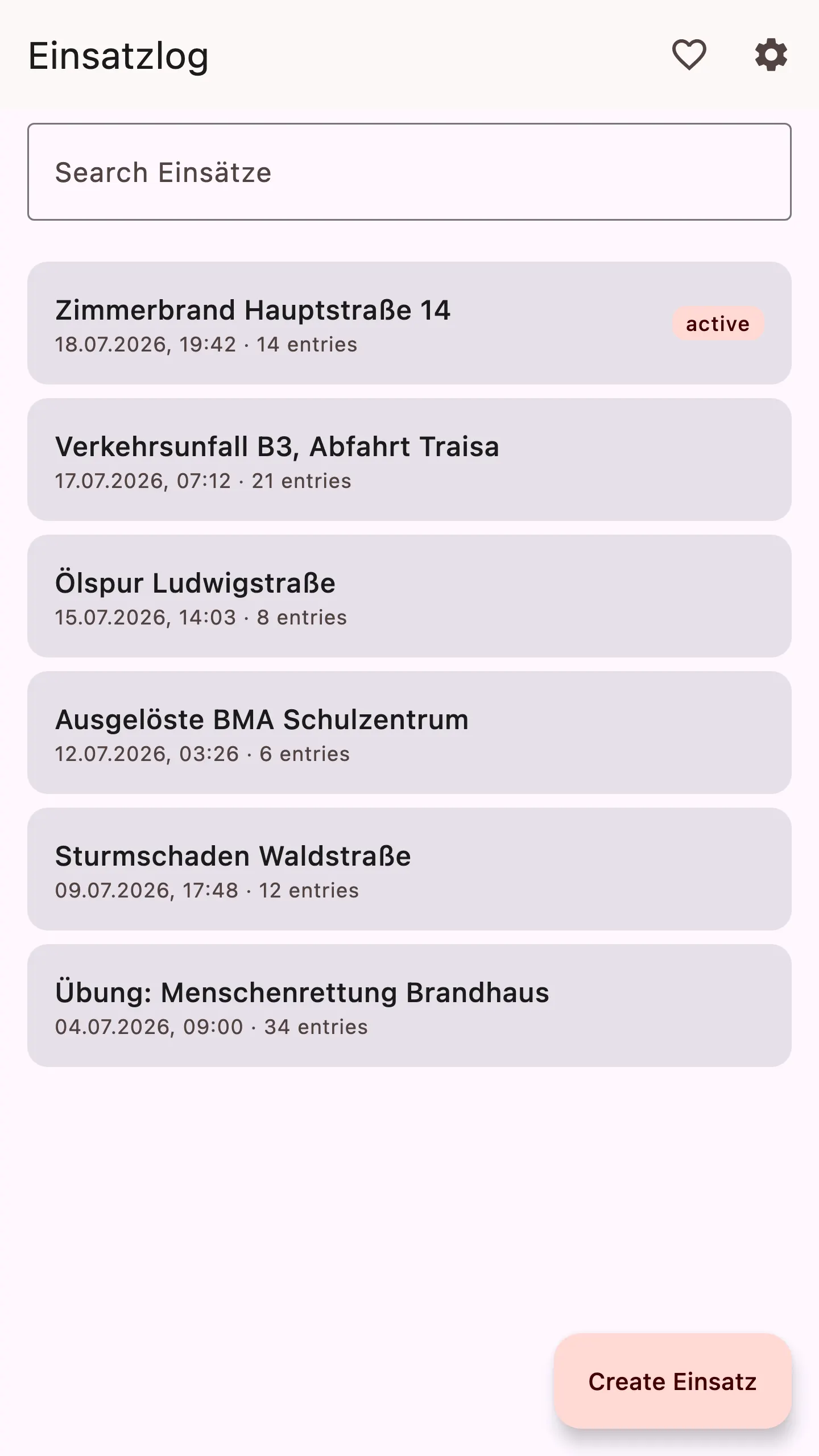
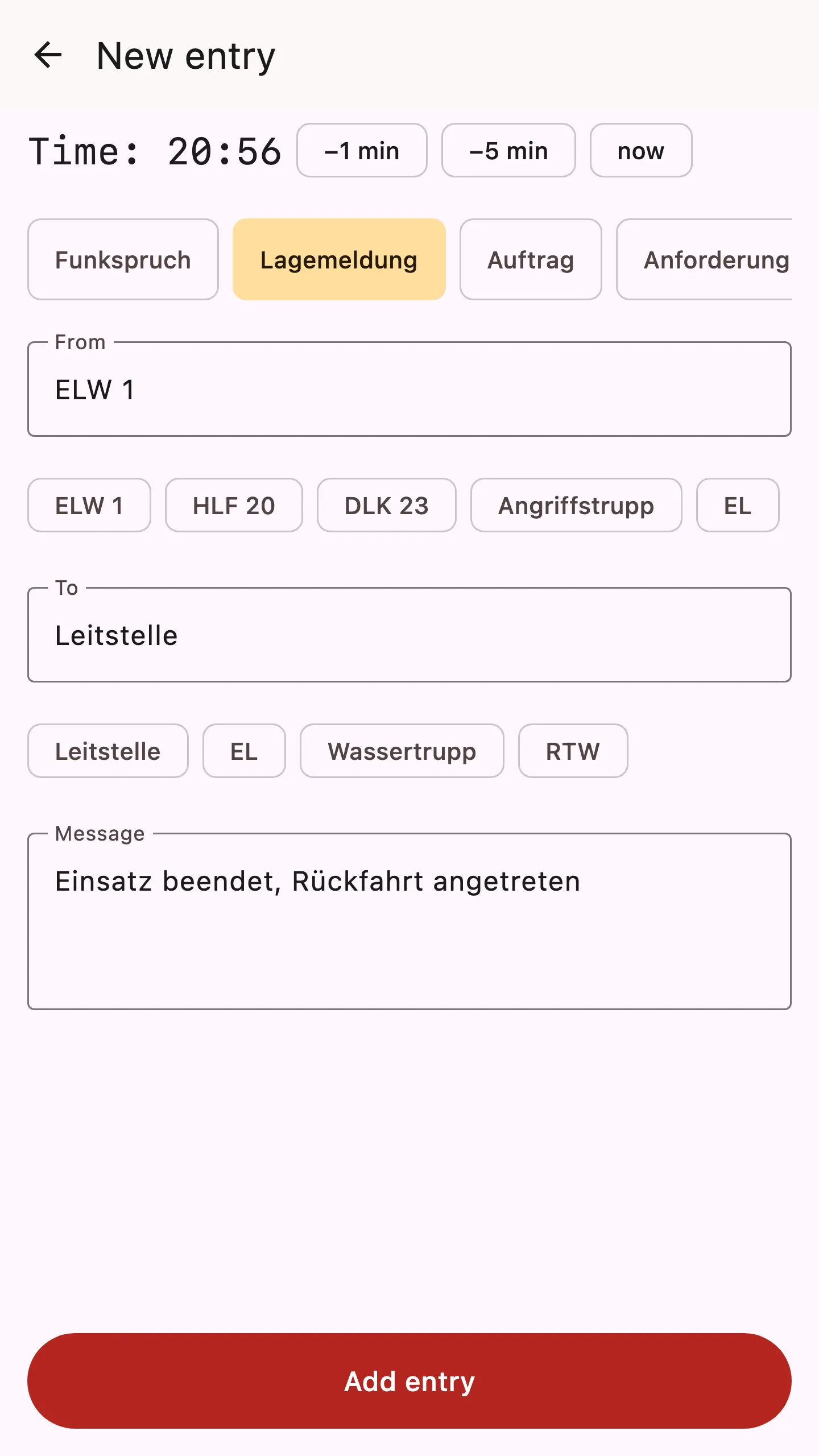
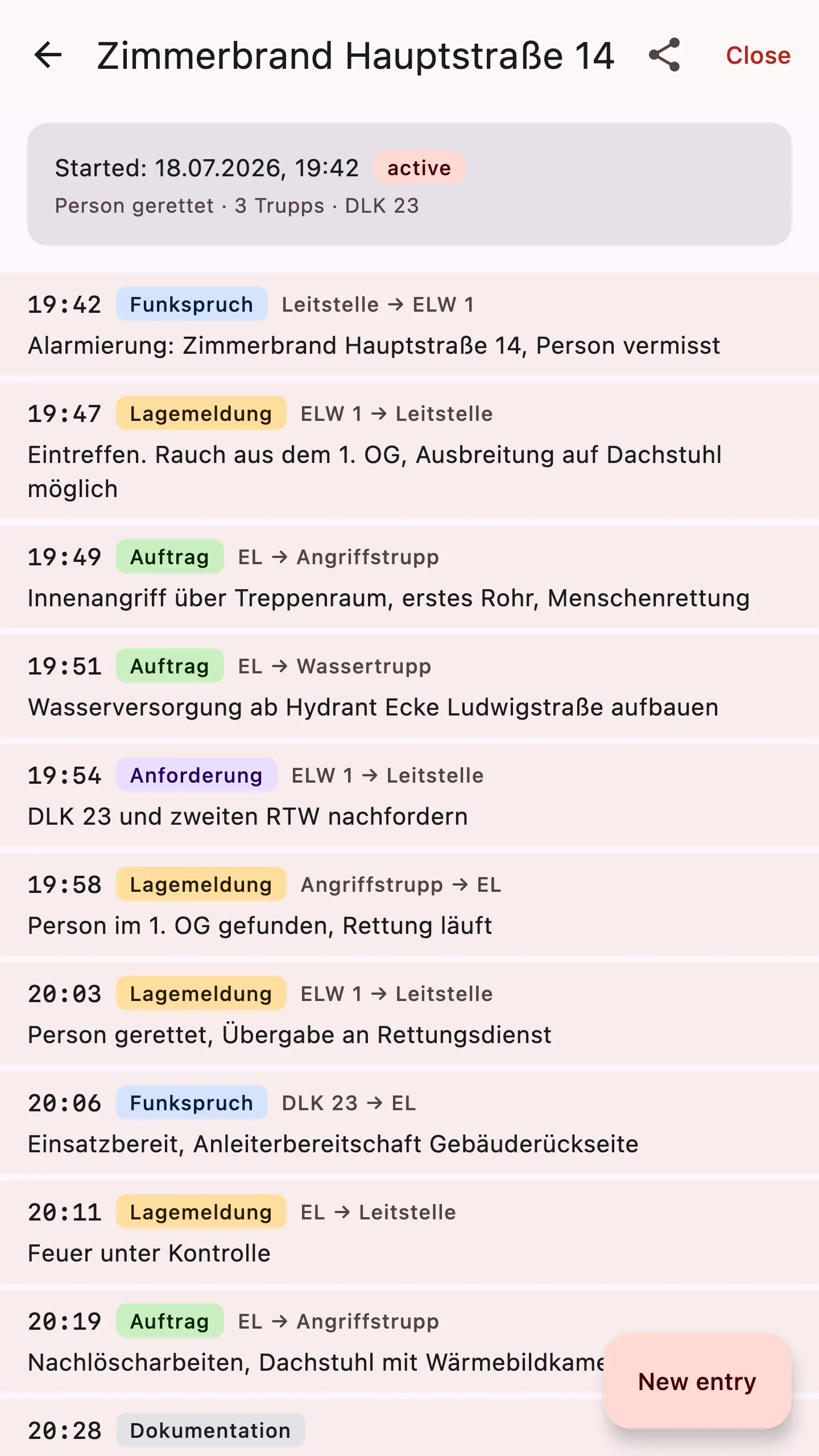
The demo video is being made. Until then, the blog shows every step.
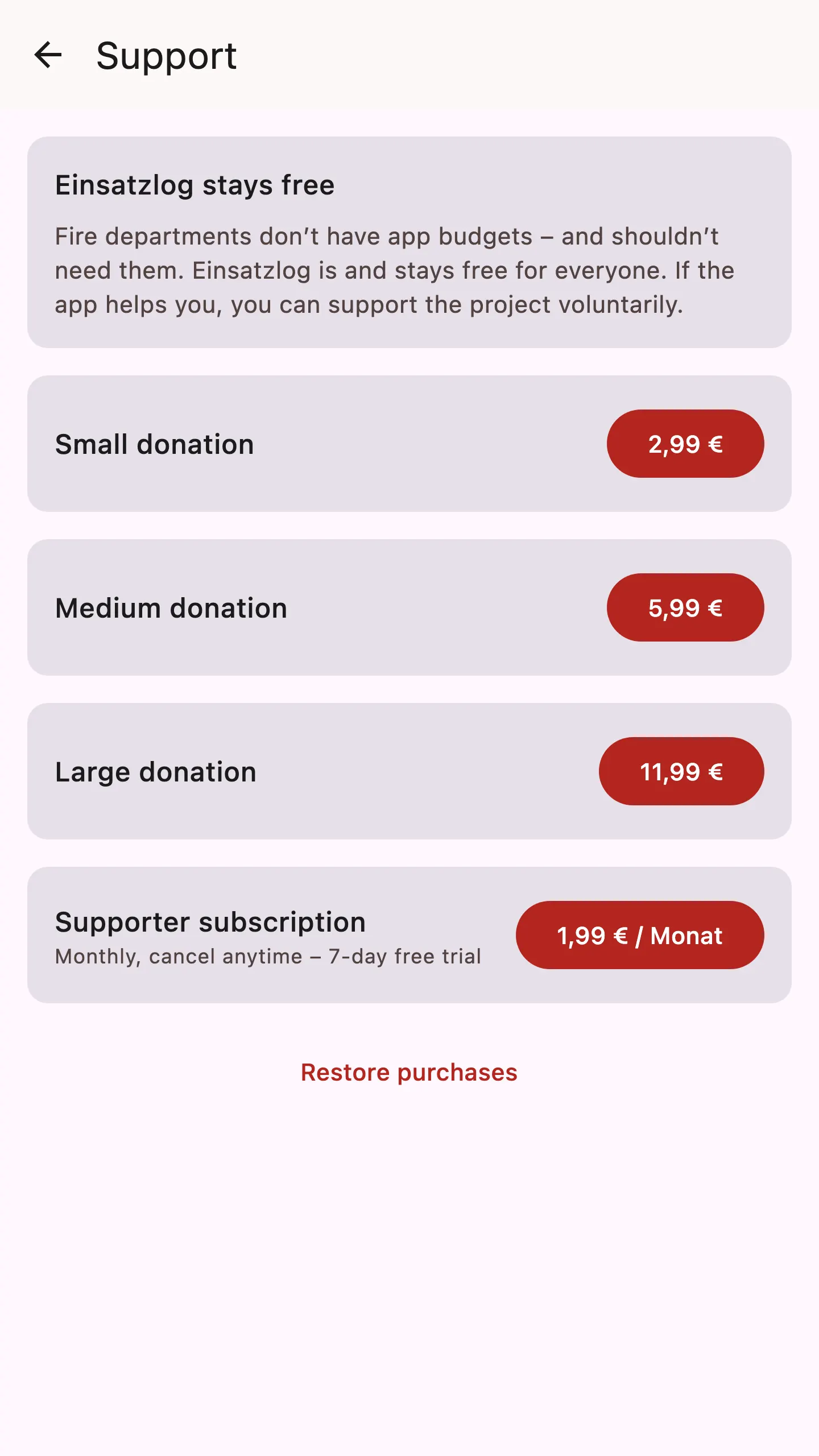
Fire departments have no app budget — and they should not need one. Einsatzlog is fully usable without paying a cent. There are no premium features, no user limits, no ads.
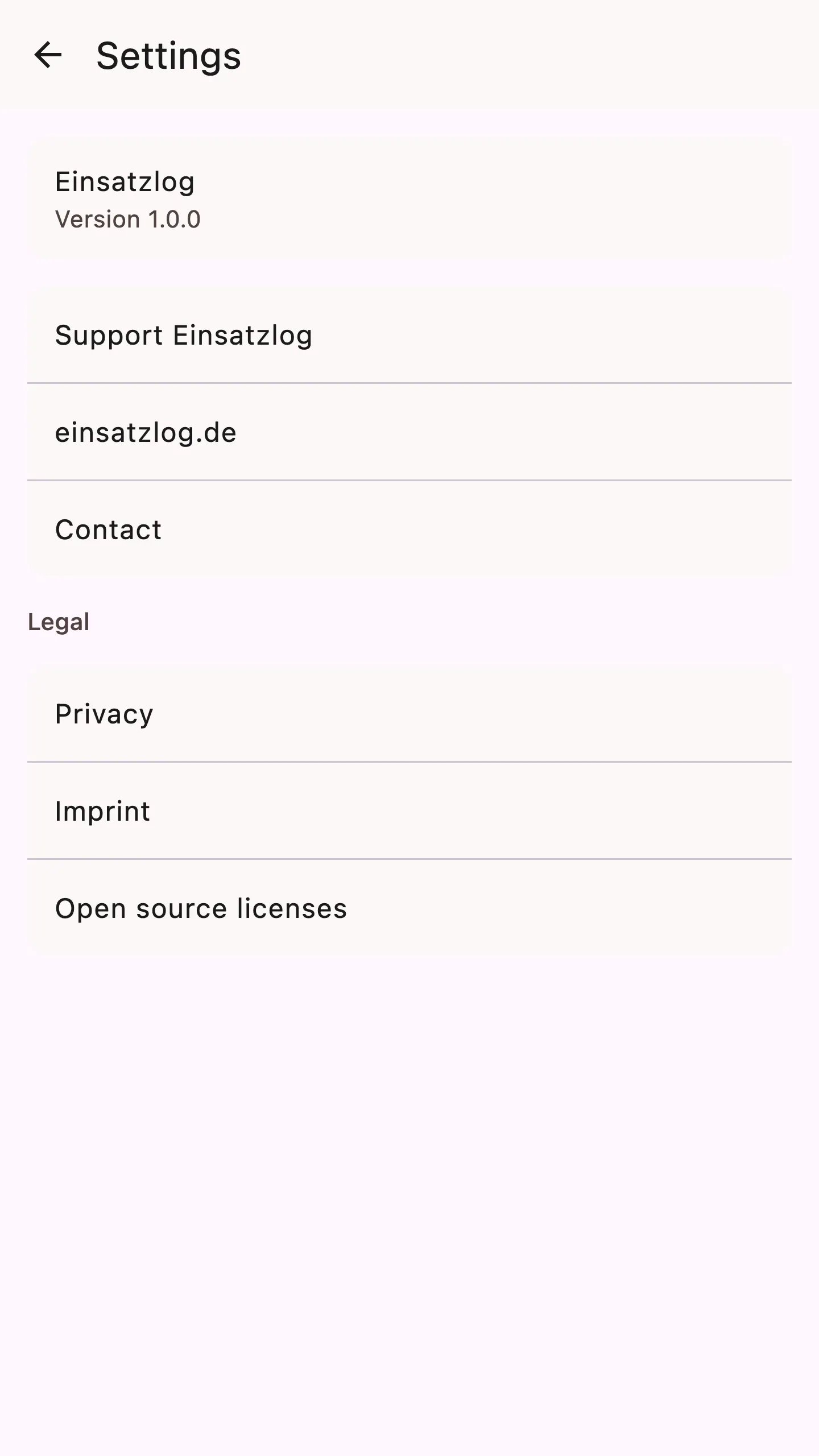
Anyone who wants to support the project can do so voluntarily inside the app: one-time donations or a small supporter subscription. It unlocks nothing — fire departments should not bid against each other for safety tooling. You get a badge and our thanks.
On top of that there is a fully open-source FOSS variant without any proprietary SDK.
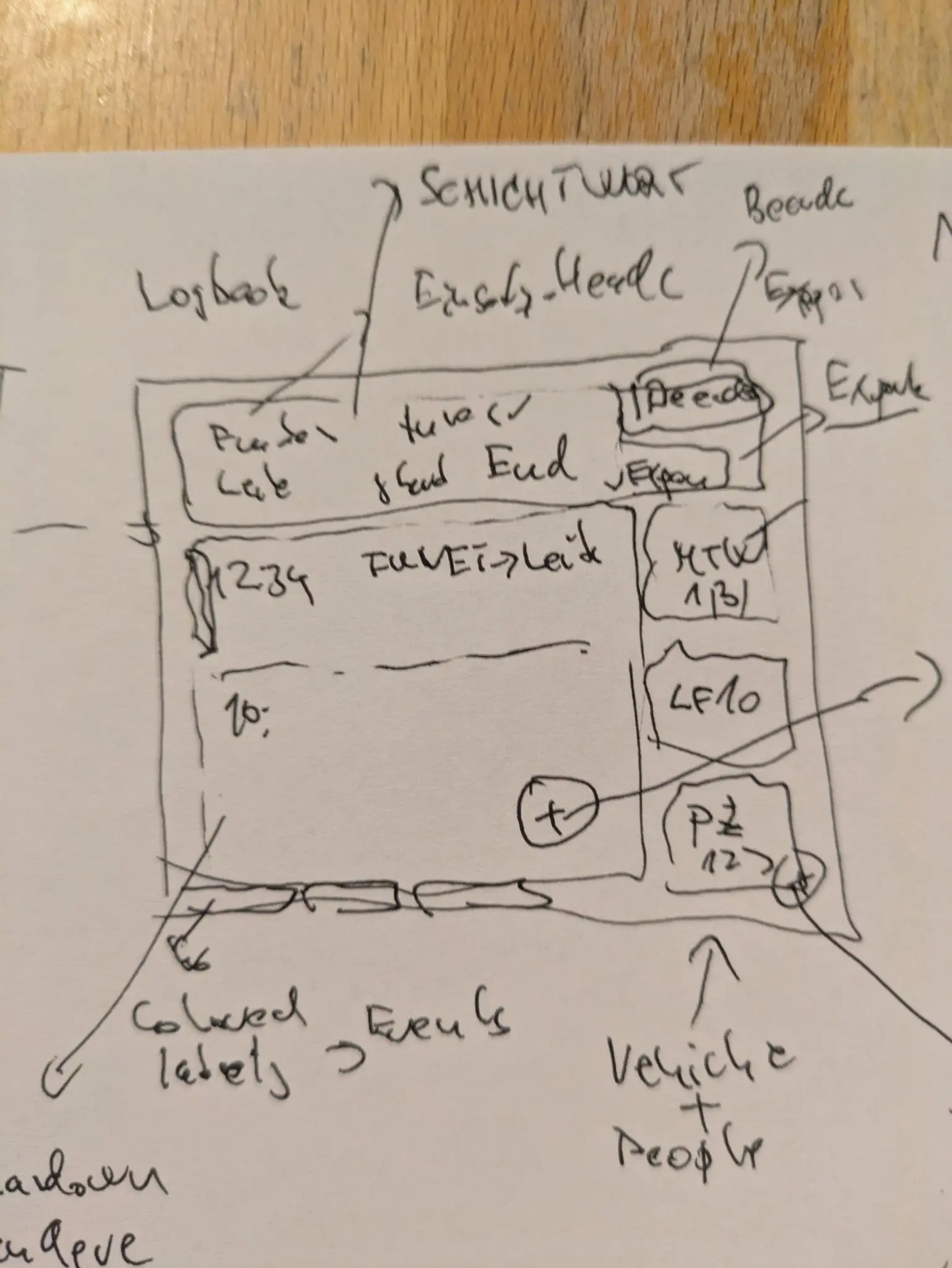
Einsatzlog is being built for the RevenueCat Shipaton 2026 — from the first napkin sketch to the app stores, in a public repository. Specs, design artifacts, roadmap and source are all open. The mistakes too.
A large-scale drill, an Einsatzleiter juggling radio traffic on paper, and the question that started this: could we build something that fits every volunteer firefighter?
A standalone tool for Atemschutzüberwachung: crew timers, cylinder pressures and audible warnings, straight in the browser. No install, no sign-in, works offline on the tablet in the command vehicle.