After the incident is before the incident
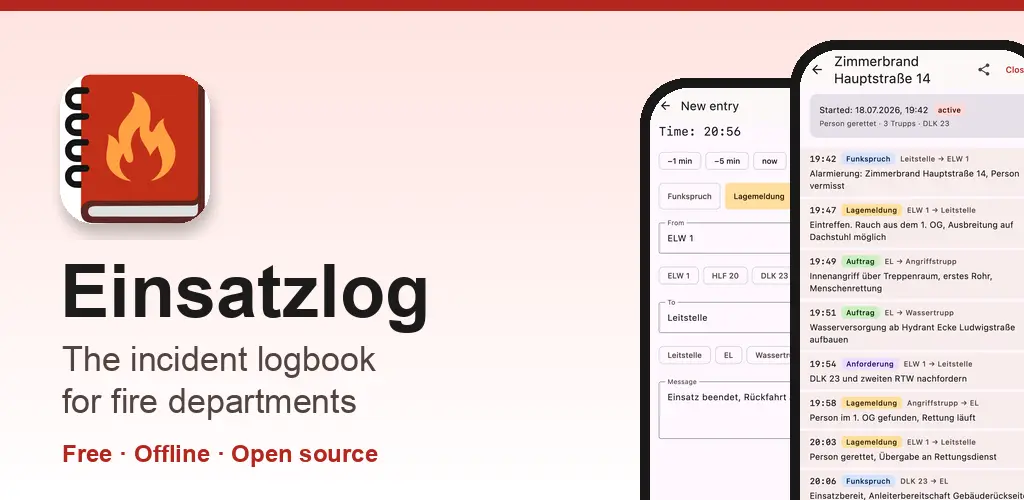
Release week is over. Time to do what every crew does after a call: clean up, restock, and get ready for the next big one – which, for Einsatzlog, means the tablet in the command vehicle.
How Einsatzlog is being built, step by step.
Release week is over. Time to do what every crew does after a call: clean up, restock, and get ready for the next big one – which, for Einsatzlog, means the tablet in the command vehicle.
How much of a Kotlin Multiplatform app is really shared? I counted: 89 % of the code, 4 expect declarations, 28 lines of Swift – and store screenshots that are rendered, not taken.
The code was done. Then came service accounts, a Test Store, a word Apple does not allow, an iOS app that did not compile, and a review that asked for a video.
Tokens, atoms, molecules, organisms and screens in one shared Kotlin UI library for Android and iOS – rules per level, code, testing, and where Liquid Glass fits in.
Three slices in one long day: the supporter screen, a PDF export without AGPL, and the boring compliance work most hackathon apps skip until the store rejects them.
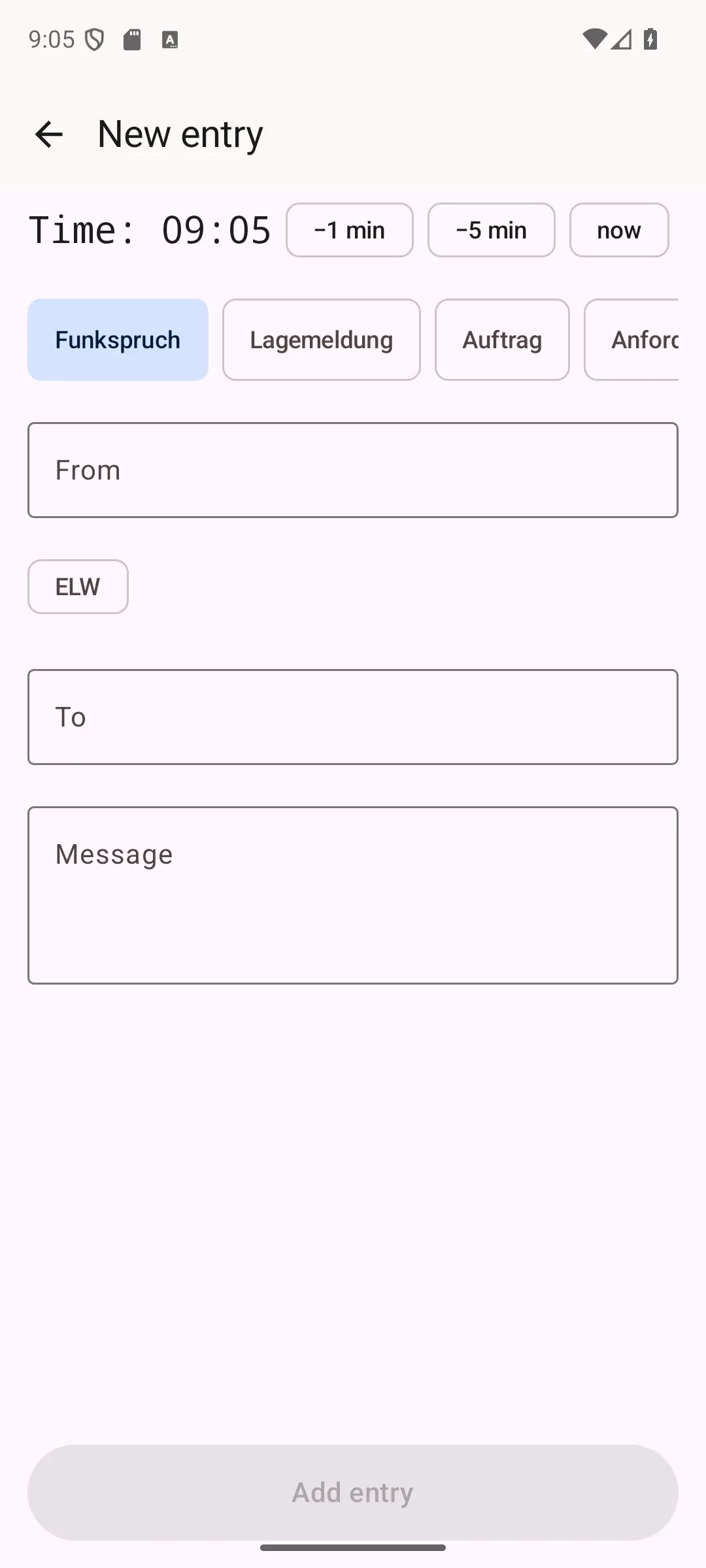
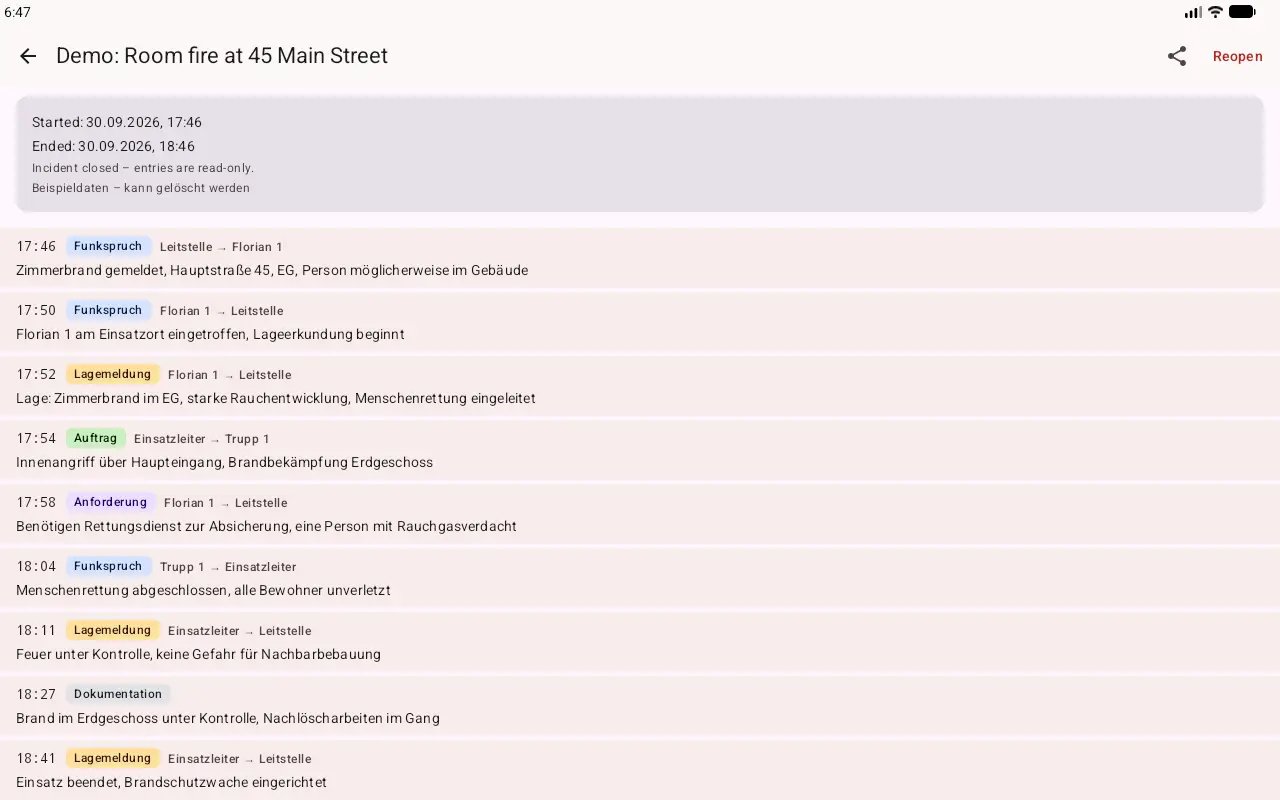
The screen the whole app exists for — and how it spends its four taps: zero for the time, one for the type, one each for From and To.
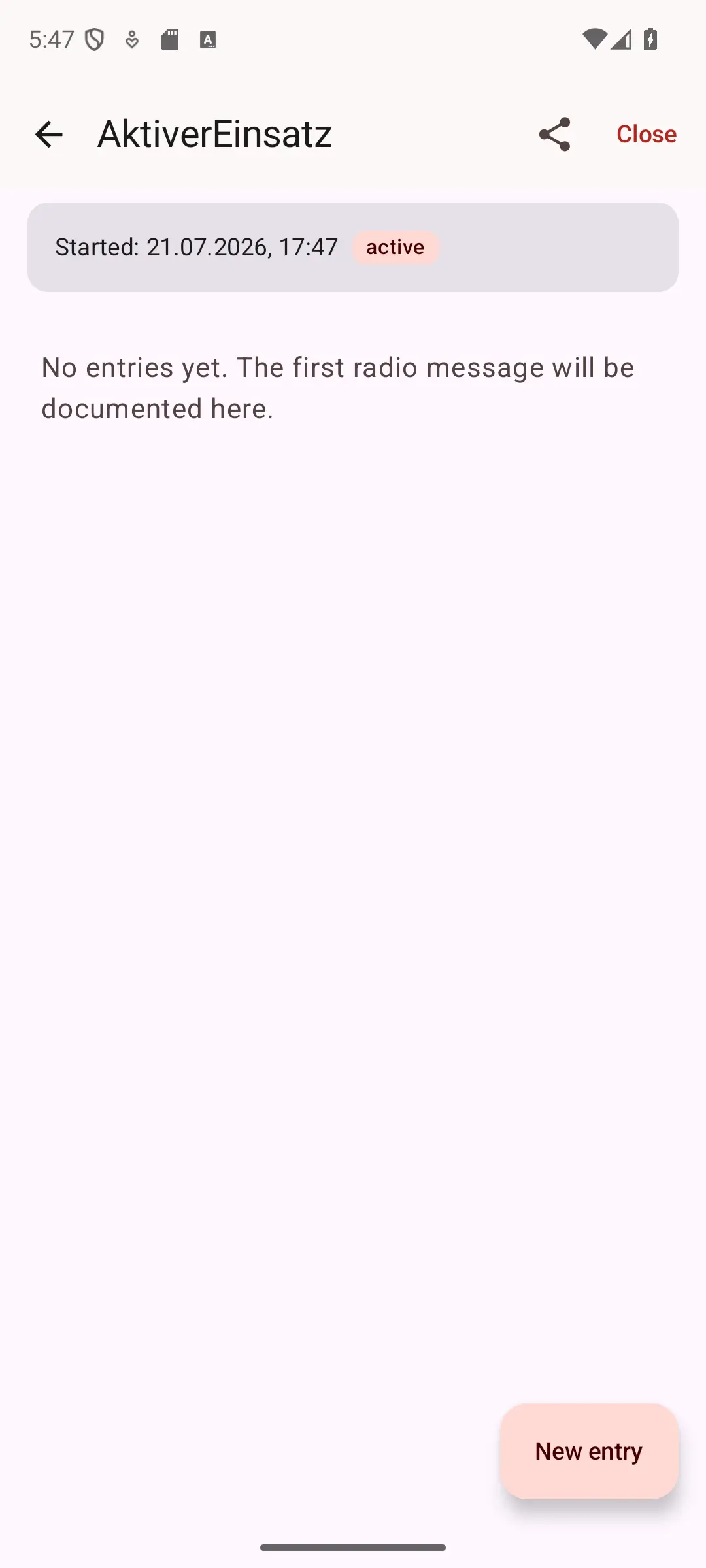
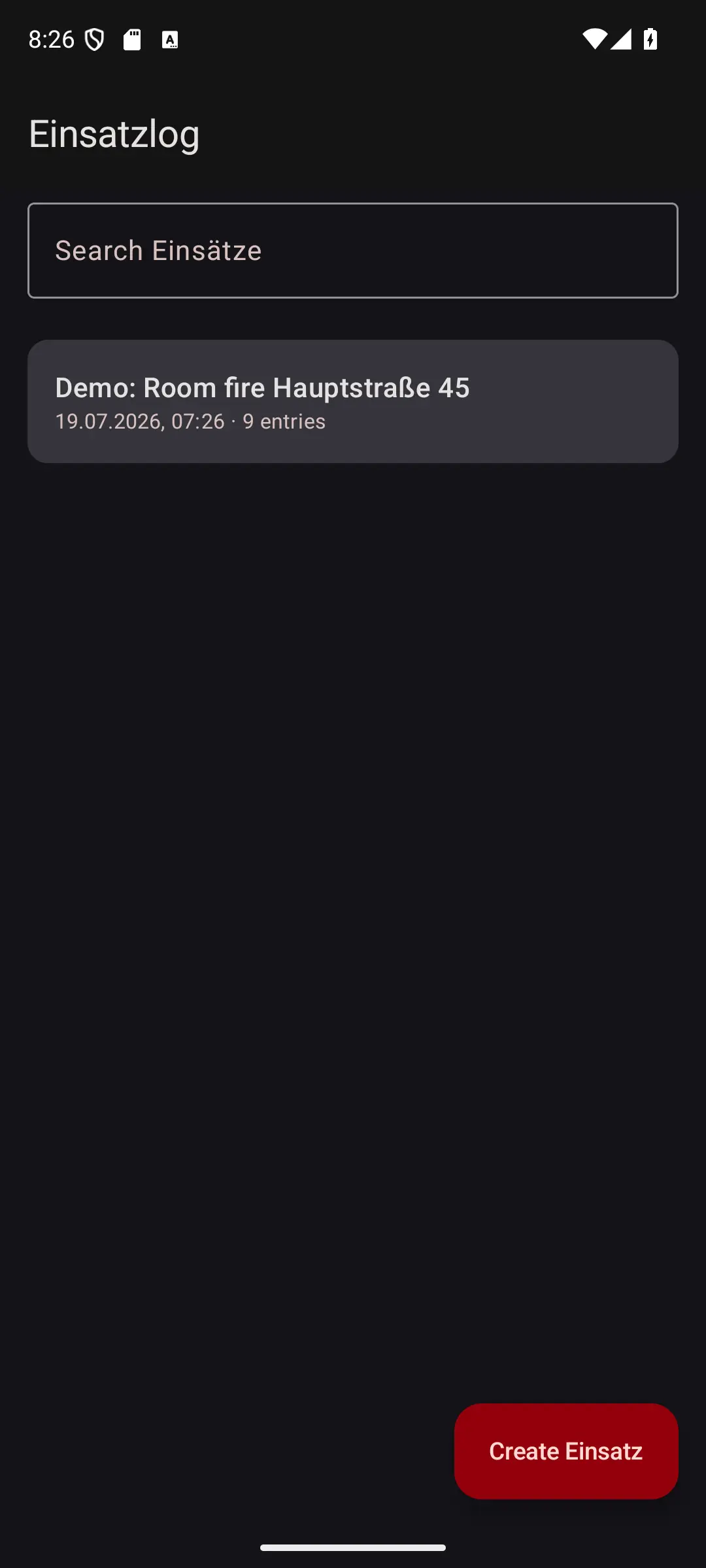
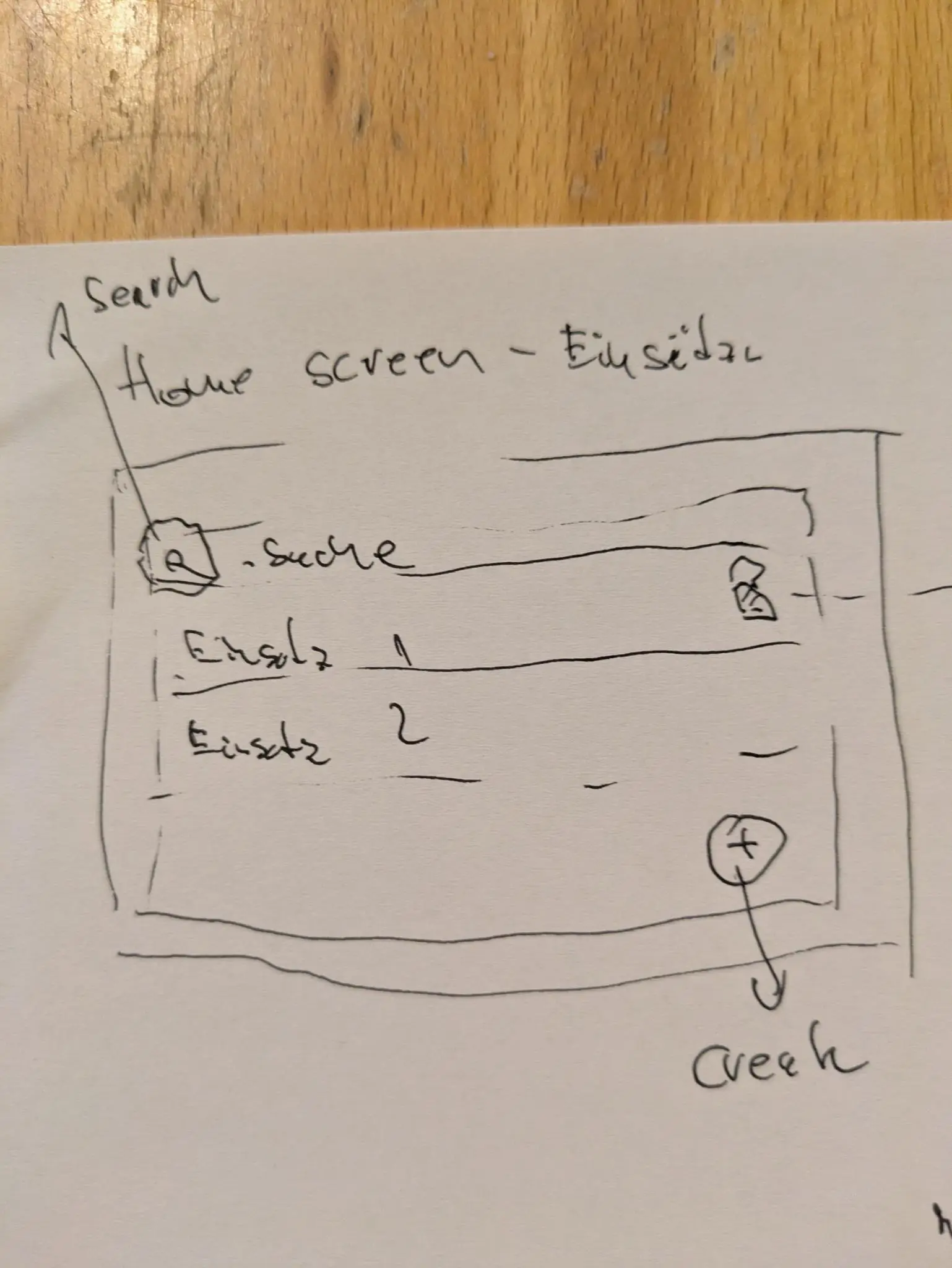
The home screen and the incident lifecycle, straight from napkin sketch to running app — plus the inconsistency the spec caught before anyone else could.
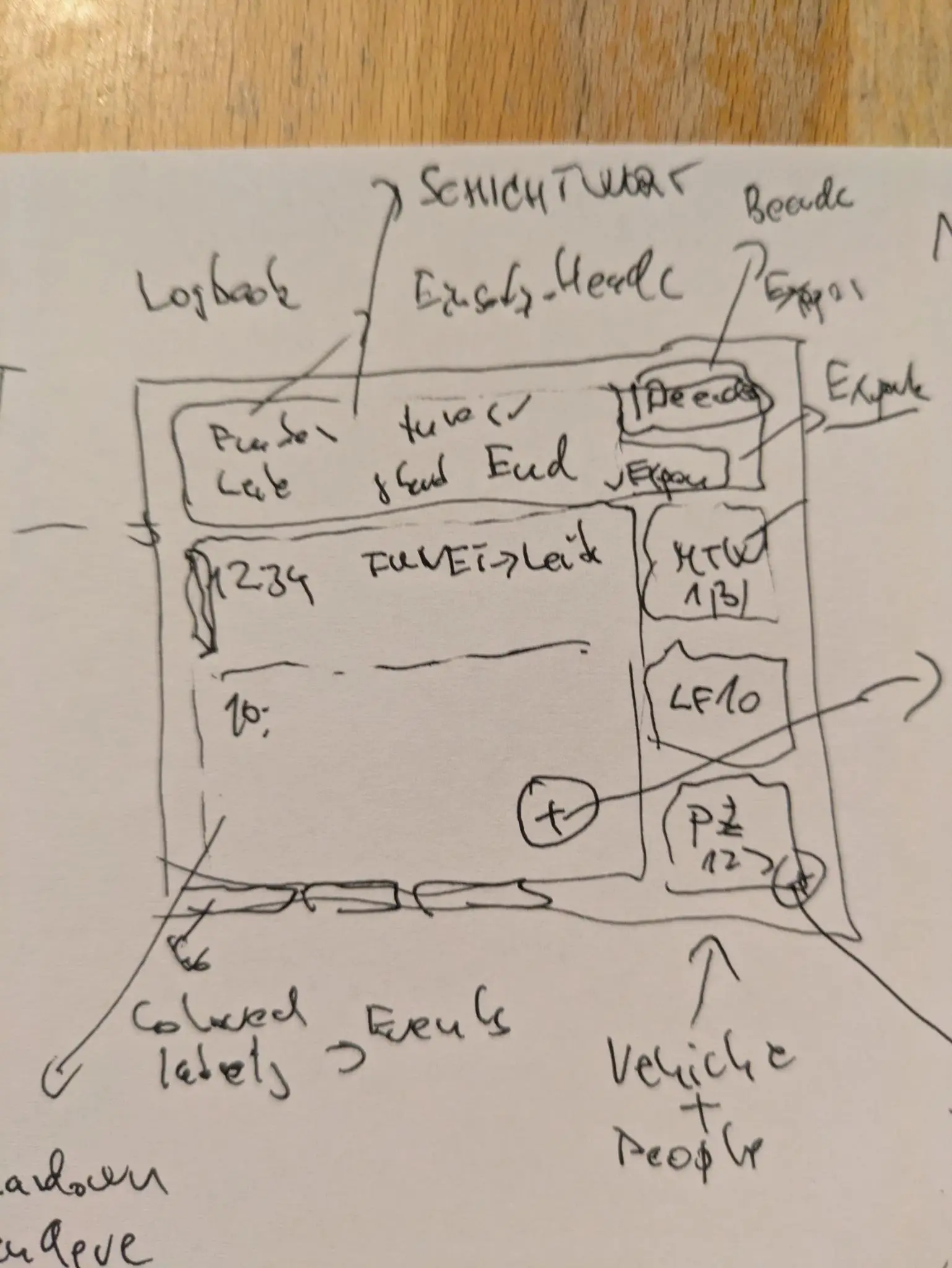
Why Einsatzlog started with a requirements PDF and three napkin sketches instead of a database schema – and how the sketches became wireframes and an atomic design system.
A large-scale drill, an Einsatzleiter juggling radio traffic on paper, and the question that started this: could we build something that fits every volunteer firefighter?